

Symbols and semiotics, the study of symbols, have a deep history ranging from hieroglyphics to icons on your smartphone. Pictograms are pictorial symbols that depict what they signify, like graphic representation of a train, airplane, etc. They play a significant role in the delivery of information within a wayfinding program.
Pictograms serve information efficiently, visualized as shorthand for information communicating location, function or instruction. The cliche “a picture paints a thousand words” springs to mind when thinking about the effectiveness of pictograms.. Length of messaging becomes important when attempting to consolidate the amount of space a sign occupies, but also to prevent users from being overloaded with information and long lines of text.
Clarifying information graphically through pictorial representation has benefits beyond their economy of visual space. They can also enhance the accessibility of messaging. Pictograms communicate a universal language, and can speak across language and literacy barriers. Pictograms are versatile in this way as they can be used to supplement information or be the standalone form of communication.
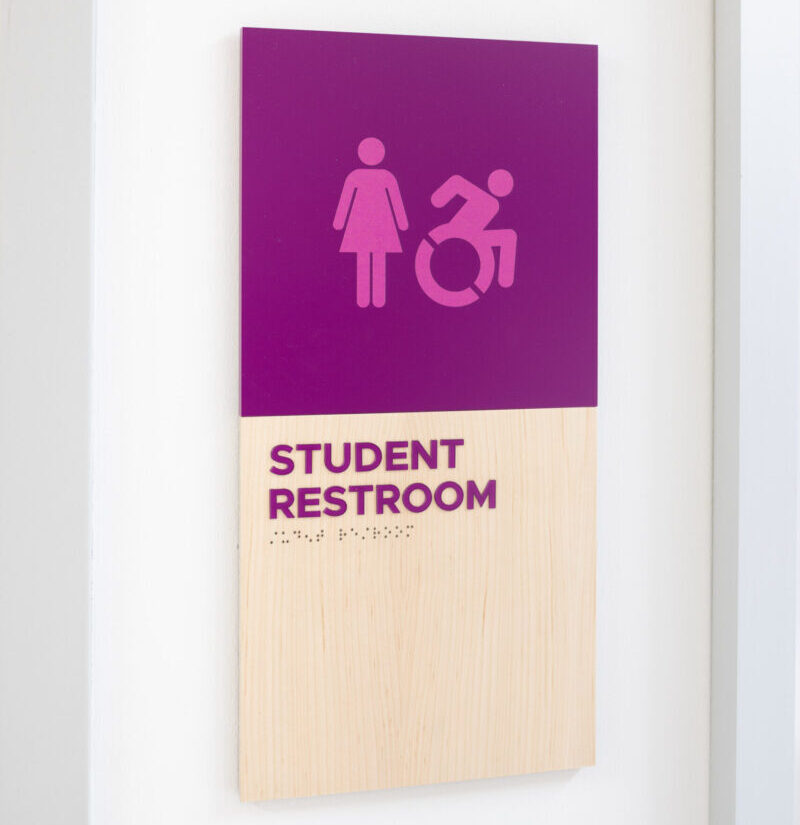
(Credit: Brett Beyer)
Consistent application of pictograms cements the meaning of common messages or graphic expressions.. This consistency led to the development of international or universal standards that are often considered when designing symbols. A “restroom” symbol will therefore be similar across a variety of contexts or cultures and easily understood by users, even if the aesthetic treatment of the symbol varies. This can bring familiarity to users navigating another language if multi-language signage is not in use. It serves a bridge to connect the gaps between written and visual language.
These visual characters can become so ingrained in our language that the meaning of the symbol is almost divorced from its origin. If you imagine the icon you’d use to save a digital file—some might recall that it’s a floppy disk—while others, typically from a younger generation, will simply know it within its digital context as the “save” icon, all while having no concept of a physical floppy disk drive that was used to save information.
(Featured Image Photo Credit: Assaf Evron)