
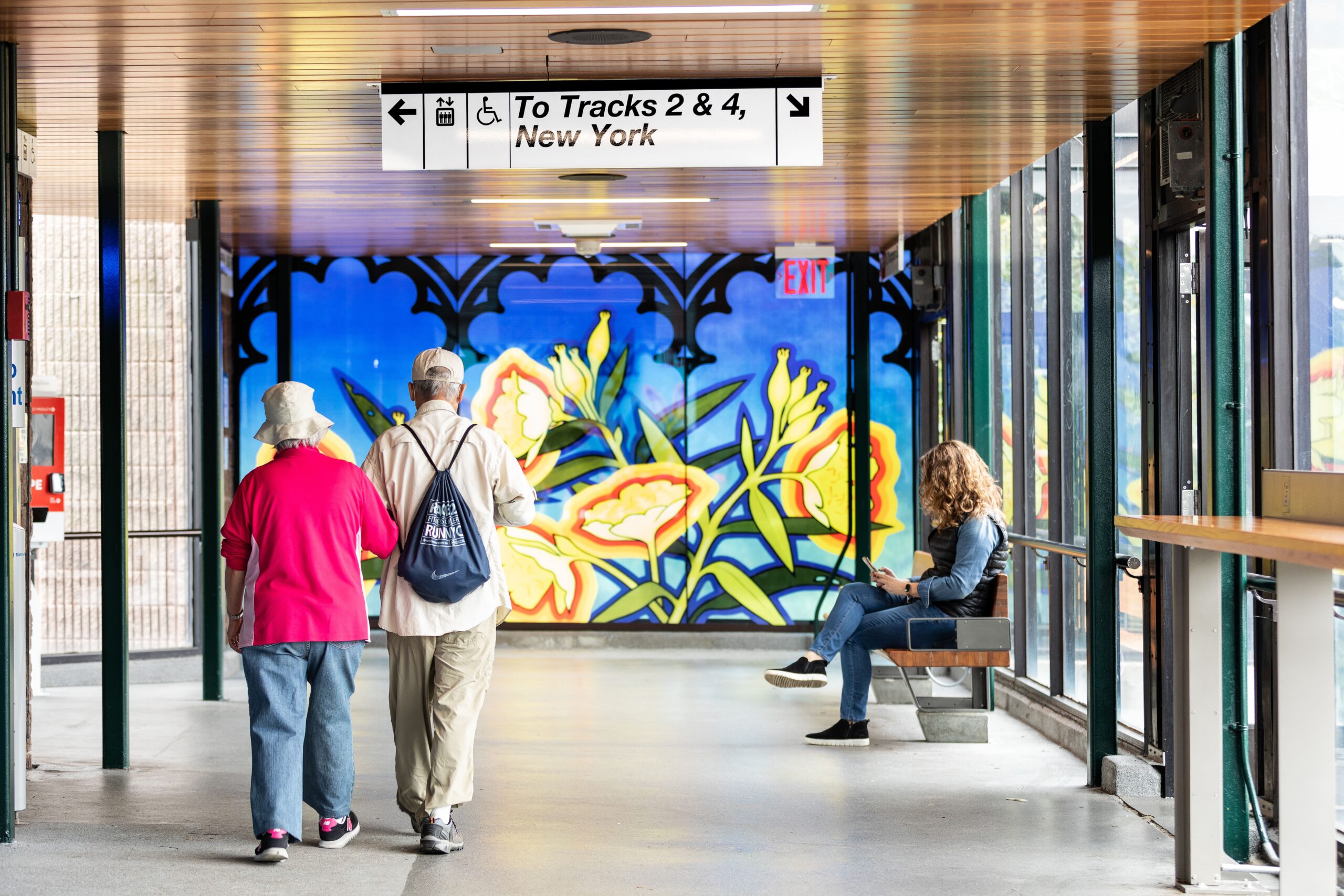
This July marks the anniversary of the Americans with Disabilities Act (ADA), a landmark civil rights law passed in 1990 to ensure equal access and protect the rights of individuals with disabilities. Born out of decades of advocacy, the ADA was a critical step toward breaking down physical and social barriers in public life—from transportation and buildings to communication and employment. While the impact of the ADA has been profound, the journey toward fully accessible, inclusive environments is ongoing. Accessibility is not only a matter of compliance—it’s a foundation for good design that benefits everyone, creating spaces that are easier to navigate, more intuitive to use, and more welcoming for all.
Over the years, the ADA has significantly influenced design standards—shaping how we approach building access, signage, transportation systems, and wayfinding. What began as a legal requirement has evolved into a broader understanding that accessibility is not just a compliance issue but a benchmark for thoughtful, inclusive design. Today, accessibility is increasingly recognized as a foundation for creating environments that serve everyone, regardless of ability.
Universal Design
Universal design is an approach that aims to create environments, products, and systems that are inherently inclusive—usable by all people, to the greatest extent possible, without the need for adaptation or specialized design. Rather than designing for a “typical” user, universal design considers the full spectrum of human diversity. This mindset not only improves accessibility for people with disabilities but also enhances usability and experience for everyone. The concept is guided by seven foundational principles:
Equitable Use: Design should be accessible and appealing to people with diverse abilities, ensuring equal use without segregation or stigma.
Flexibility in Use: Design should support varied user preferences and abilities, offering choices and accommodating different ways of interacting.
Simple and Intuitive Use: Design should be easy to understand and use regardless of the user’s experience, language, or focus level.
Perceptible Information: Design should communicate essential information clearly through multiple modes, regardless of environment or user ability.
Tolerance for Error: Design should minimize risks and negative outcomes from accidental or unintended actions.
Low Physical Effort: Design should allow for comfortable, efficient use with minimal fatigue or strain.
Size and Space for Approach and Use: Design should ensure that users of all body types and mobility levels can easily reach, approach, and use all features.
Universal design makes environments usable by all people by prioritizing ease of navigation, accessibility, and intuitive understanding for everyone—regardless of ability, age, or background. By applying its seven principles, universal design ensures that spaces are not only compliant with accessibility requirements but also welcoming, functional, and supportive for a wide range of users.
For example, elevators and escalators benefit far more than just individuals who use wheelchairs—they also assist travelers with luggage, parents with strollers, people with temporary injuries, and anyone who may struggle with stairs. This reflects the principle of Equitable Use, as it provides equal benefit to a diverse set of users without segregation. Similarly, clear signage allows all people to navigate spaces efficiently and confidently, reducing confusion and stress. This aligns with Simple and Intuitive Use, which ensures that environments are easy to understand regardless of a person’s experience or focus level. Lastly, audio and visual alerts—such as those used in elevators, transit systems, and emergency notifications—support individuals with sensory differences while also aiding anyone in noisy or chaotic settings. This demonstrates the principle of Perceptible Information, which calls for communicating essential information through multiple modes to ensure clarity for all users. These examples show how universal design not only improves accessibility but also enhances convenience, safety, and usability for everyone.
Universal Accessibility
Universal accessibility encompasses a broad range of features and considerations designed to ensure that environments are usable and welcoming to everyone, regardless of physical, sensory, cognitive, or linguistic ability. Wayfinding signage plays a key role in this effort, with clear, legible typography, high-contrast colors, and consistent placement and terminology. Pictograms help support communication without relying on language, while plain language and high-contrast graphics ensure visibility and understanding in all lighting conditions.
Physical access is another fundamental component, including features like ramps, elevators, escalators, automatic doors, accessible restrooms, and inclusive seating options. In the digital realm, accessibility includes ADA-compliant websites, apps, and kiosks, as well as tools like QR codes that link to mobile maps or audio guidance, making navigation easier for all users.
Cognitive and neurodivergent accessibility focuses on simple, consistent layouts, quiet zones or low-stimulation areas, pictogram use, and simplified navigation systems that reduce cognitive load. Sensory accessibility addresses the needs of individuals with visual, auditory, or tactile differences through tools like Braille, large-print signage, tactile maps, assistive listening systems, captioning, visual alarms, and textured surfaces that guide visually impaired individuals in places like transit platforms.
Lastly, inclusive communication ensures that information is available in multiple formats—verbal, written, and pictorial—with additional support through sign language interpreters, video relay services, translation, and multilingual access. These strategies, taken together, form a comprehensive approach to accessibility that benefits all users, not just those with disabilities.
Raising Awareness and Improving Environments
Auditing existing spaces for outdated or ineffective signage, hidden barriers, confusing maps, or poorly marked detours is essential in maintaining environments that are truly inclusive and navigable. While ADA compliance sets a baseline, organizations and companies are increasingly encouraged to move beyond minimum standards and aim for environments that prioritize dignity, equity, and independence for all users. This requires a shift in mindset—from viewing accessibility as a checklist to embracing it as a core element of good design.
Ongoing education and awareness are key to this effort, particularly for architects, designers, facility managers, and the public. The advantages of accessible, user-friendly environments extend to the entire population. Clear directions and intuitive navigation enhance the overall user experience, reduce stress, and save time—especially in complex or high-traffic spaces like airports, hospitals, or transit hubs. Strong wayfinding strategies improve traffic and crowd flow, minimize bottlenecks, and promote safety by clearly identifying exits and emergency routes. Importantly, when environments are easy to navigate, people can move through them independently, without needing to ask for help. This fosters a sense of autonomy and reinforces a culture of inclusivity and respect. Ultimately, inclusive design not only fulfills a social responsibility but also elevates the functionality, efficiency, and experience of the built environment for everyone.
The Path Ahead
Accessibility is a right, not a privilege—and universal design is one of the most effective ways we can ensure that right is upheld. As we mark the 35th anniversary of the Americans with Disabilities Act, it’s a moment to celebrate the progress made, reflect on the work still ahead, and recommit to creating environments that serve everyone with dignity and equity. This milestone reminds us that accessibility is not a one-time achievement, but an ongoing commitment to inclusion, improvement, and innovation. When we design for all, everyone benefits. Universal accessibility makes spaces easier to navigate, less stressful to use, and more welcoming for all—helping to make daily life a little simpler, safer, and more connected for everyone.
Photo Credit: Assaf Evron