
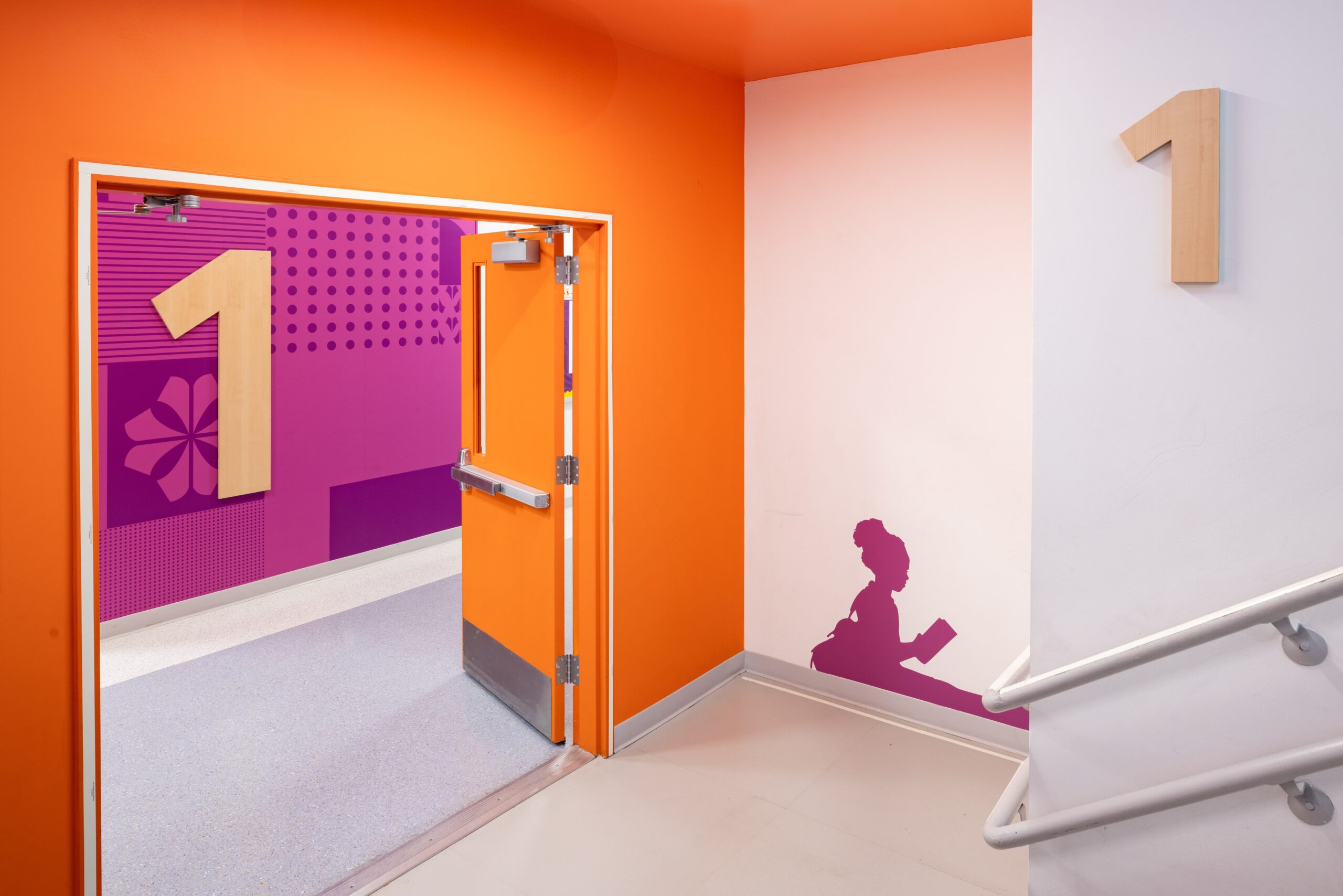
February is often a season for reflection and connection. In the world of wayfinding, that mindset manifests as empathy. It is found in the quiet, often invisible decisions that transform complex environments—like sprawling campuses, high-stakes hospital, or dense urban centers—into a space that feels intuitive, calm, and welcoming.
At its best, wayfinding is an act of care. It moves beyond checking boxes or meeting baseline requirements to ask a fundamental question: What does a person need to feel confident and supported in this moment? When design begins there, the result is more than just clarity—it is comfort.
How Thoughtful Design Creates a Sense of Belonging
Much of what makes a space welcoming is easy to overlook when it is executed well. These details don’t call attention to themselves; instead, they quietly shape how people move, decide, and feel as they navigate the built environment.
Designing for All Abilities: Thoughtful wayfinding considers the full spectrum of users from the outset. Incorporating Braille, tactile elements, and predictable patterns creates environments that are truly usable for everyone, not just compliant on paper. We believe accessibility is not a secondary “add-on,” but a cornerstone of the visitor experience.
Clarity and Legibility: High-contrast typography and carefully considered color palettes reduce strain and uncertainty. These choices don’t just assist users with low vision; they provide essential legibility for everyone, especially in fast-paced or high-stress settings where split-second decisions are fleeting.
Reducing Anxiety Through Intuition: Clear decision-making “nodes” help people pause, choose, and move forward with confidence. Maps that reflect lived experience—rather than just architectural plans—reduce cognitive overload. When navigation feels intuitive, the stress of being lost fades into the background.
Why Empathy Matters
Small, intentional decisions have an outsized impact on the human experience. Knowing where you are and where you’re going builds trust in a place. Clear navigation preserves dignity and frees up mental energy for the reason someone is there in the first place: to learn, to heal, to work, or to connect.
Empathetic wayfinding sends a subtle but powerful message: You belong here. It acknowledges that unfamiliar spaces can be intimidating and that good design exists to ease that tension.
Empathy in Practice: Listening Before Designing
At Via Collective, empathy doesn’t come from assumptions—it comes from listening. Our process prioritizes user research, observations, and stakeholder interviews to reveal the friction points designers might otherwise miss: an ambiguous doorway, a map that feels disconnected from the path, or a sign placed just out of view. By paying attention to how people actually move through space, our design decisions become more grounded, responsive, and human.
Designing with Care
For us, empathy is not a seasonal theme; it is a guiding principle. We believe wayfinding is about more than moving people from Point A to Point B. It is about creating environments that feel clear, considerate, and kind.
As you move through the world this month, we invite you to notice the systems guiding you. Where does a space make you feel confident? Where does it leave you guessing?
Thoughtful wayfinding isn’t just functional design—it is care, made visible.
Photo Credit: Bridgit Beyer