April marked a major milestone for the design community as the Society for Experiential Graphic Design (SEGD) Accessible Design Task Force launched its first certificate-based Professional Development Bootcamp at the 2026 ISA International Sign Expo in Orlando, Florida. Focused on accessible design and evolving building code requirements, the program set out to move beyond theory and immerse participants in real-world application—and it successfully achieved its objective.
A New Model for Learning
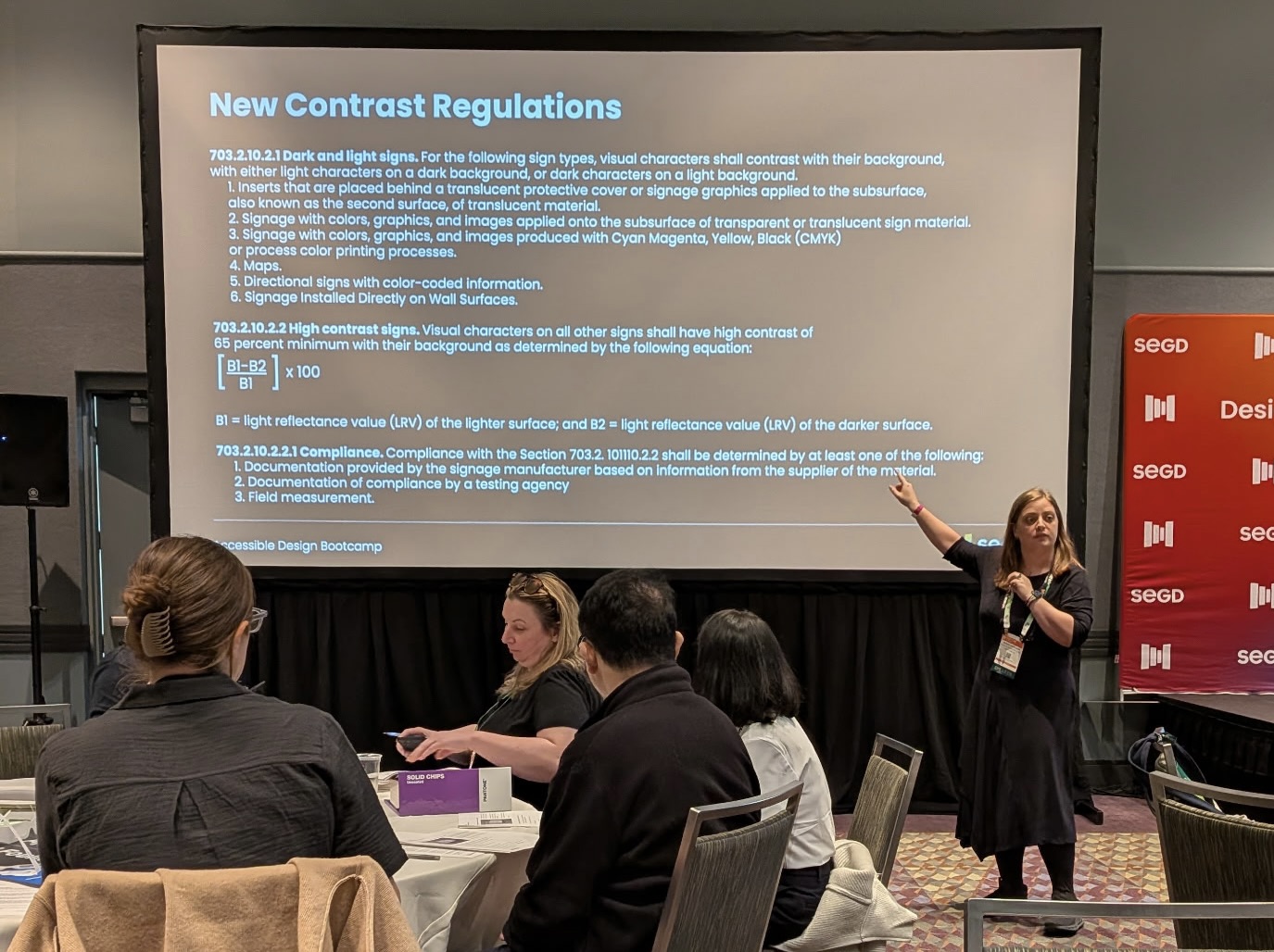
Responding to growing demand for meaningful credentials, SEGD’s Bootcamp introduced a more rigorous, hands-on approach to professional development. Rather than a traditional lecture, the program functioned as a structured learning lab, with participants rotating through three focused studios: Contrast, Tactile Characters, and Visual Characters.
Each session challenged attendees to engage directly with the complexities of accessible design—from calculating Light Reflectance Value (LRV) and understanding contrast thresholds to physically setting tactile type and evaluating legibility for low-vision users. The takeaway was clear: accessibility is not abstract—it’s measurable, testable, and deeply human. Participants who completed the program earned a certificate recognizing advanced training in accessible signage design.
Making Standards Tangible
One of the Bootcamp’s most impactful aspects was its ability to translate technical standards into lived experience. Through tools like vision-impairment simulation goggles and tactile exercises completed while blindfolded, participants experienced firsthand how design decisions affect usability. These moments shifted accessibility from compliance to something immediate and unforgettable.
A key voice in this experience was Koni Sims of the American Council of the Blind, who served as moderator and shared her lived experience navigating the built environment. She emphasized a critical perspective: building codes are not limitations, but enablers—tools that support independence, dignity, and access. Her insights grounded the workshop in real-world impact.
The Bootcamp was led by a multidisciplinary team including Jessica Schrader (Via Collective), Simon Majarian (SKA), Chris McCampbell (CannonDesign), Koni Sims, Lucy Pereira (APCO Signs), and George Lim (Tangram Design). Their combined expertise created a balanced, deeply engaging learning environment.
A Shift in Practice
The success of the Bootcamp reflects a broader shift in the design industry. Designers are no longer just selecting colors or typefaces—they are responsible for meeting measurable accessibility standards, understanding evolving regulations, and designing with greater empathy and precision.
With updates to ICC A117.1 on the horizon, particularly around contrast and legibility, programs like this ensure designers and fabricators are prepared to respond thoughtfully and effectively.
Looking Ahead
If this first Bootcamp is any indication, it’s just the beginning. The strong response points to a growing appetite for deeper, more applied learning in accessibility. More importantly, it demonstrated the power of experience-based education—moving beyond presentation to create lasting understanding. The bootcamp’s takeaways that the community will carry forward may be its most meaningful impact.