
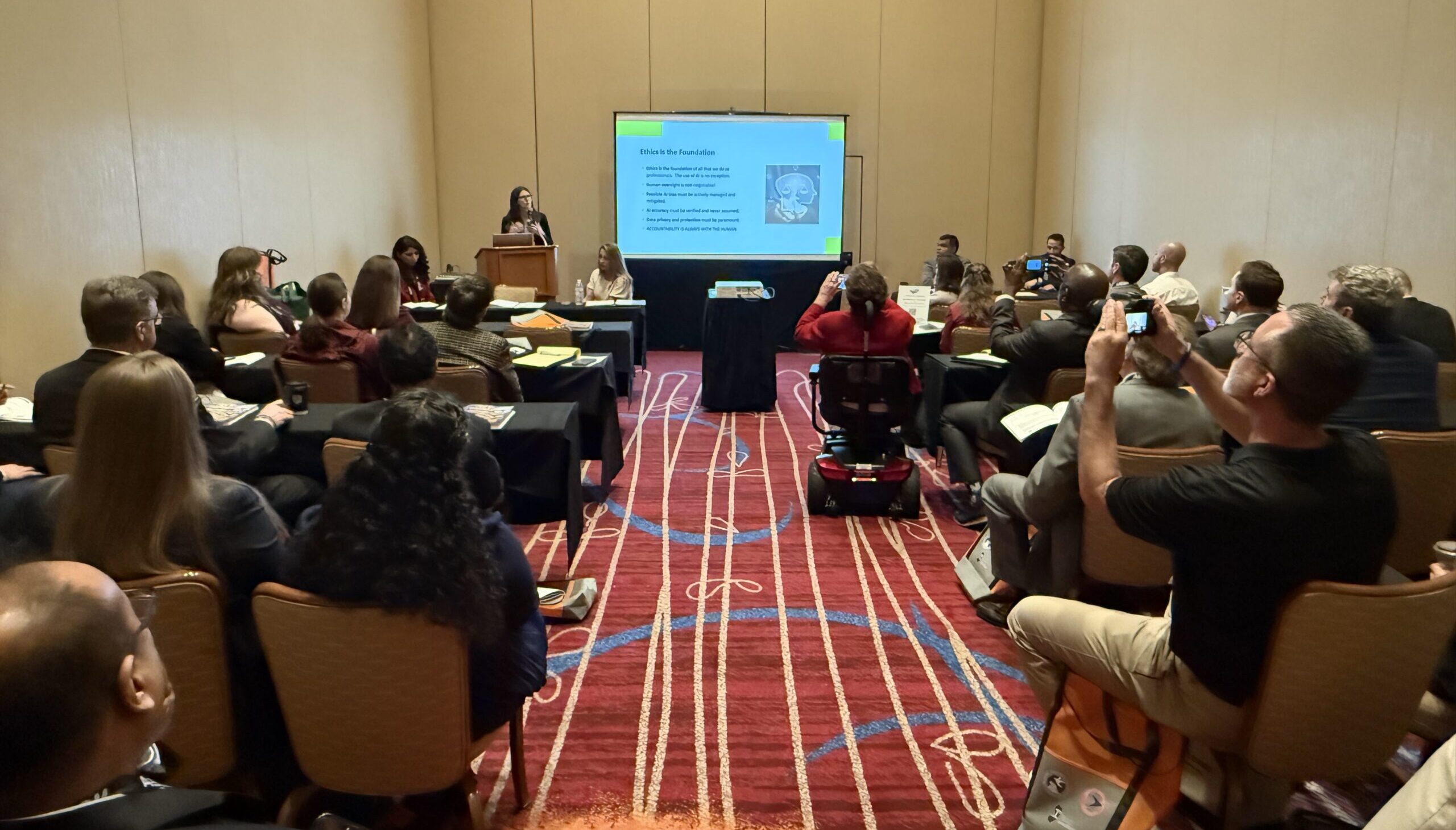
This year’s NJTransAction Conference brought together leaders across transportation, infrastructure, and design to discuss some of the industry’s most pressing challenges. Across sessions, three themes stood out: the rapid rise of AI in construction, the deep coordination required for the success of the 2026 FIFA World Cup, and the ongoing effort to deliver major infrastructure in dense, high-stakes environments. Together, they point to an industry evolving quickly—and demanding new ways of working.
AI is Reshaping How We Build
AI is already transforming construction and project delivery. A standout example was the Port Authority’s pilot of Twin Knowledge, an AI-powered copilot streamlining design, engineering, and construction workflows.
The impact is immediate. Tasks like drawing reviews and document comparisons—once hours of manual work—are now completed in seconds. Teams reported:
- Up to an 80 percent reduction in review time
- A 25 percent drop in Requests for Information (RFIs)
- Measurable and scalable cost savings.
More importantly, AI is becoming embedded in daily workflows, helping teams validate requirements, extract data, and manage complex documentation at scale. While agencies are moving toward more integrated automation, one point was consistent: AI enhances efficiency, but responsibility remains human. Accuracy and delivery still depend on expertise.
Coordinating the FIFA World Cup
Planning for the 2026 FIFA World Cup in the New York–New Jersey region highlights a different level of challenge. With 48 teams, 104 matches, and millions of visitors, success depends on sustained, multi-agency collaboration.
Transit agencies, state police, departments of transportation, and host committees have spent years aligning operations and contingency plans alongside federal and international partners. Transportation and user experience are central. With no general parking at MetLife Stadium, agencies plan to move up to 40,000 spectators per match via public transit—requiring expanded rail service, new bus infrastructure, and tightly coordinated crowd management.
Supporting a global audience adds another layer, with multilingual signage, digital tools, and on-the-ground guidance playing a critical role. Large-scale events like this are no longer just logistical challenges—they’re exercises in systems thinking
Delivering Infrastructure at Scale
The conference also highlighted the realities of delivering major infrastructure, with the Hudson Tunnel at the forefront. This $19.6 billion project will expand rail capacity between New Jersey and New York while rehabilitating aging infrastructure.
Projects of this magnitude require constant coordination across agencies, careful navigation of funding and political pressures, and construction within dense urban environments. Despite these challenges, progress continues—bringing long-term benefits including improved mobility, resilience, and job creation.
At a local level, transit-oriented development in places like Pennsauken shows how infrastructure investment can shape communities. By linking transit access with housing, public space, and pedestrian improvements, these efforts are creating more connected, livable environments.
Looking Ahead
Across all three themes, a clear takeaway emerged: the future of infrastructure isn’t just about building more—it’s about building smarter and more collaboratively. AI is accelerating workflows, global events are redefining coordination, and major projects continue to test how the industry delivers at scale.
Together, these shifts signal an industry in transition—one that will require more integrated thinking, stronger collaboration, and a deeper understanding of how systems connect.
Photo Credit: NJ TransAction