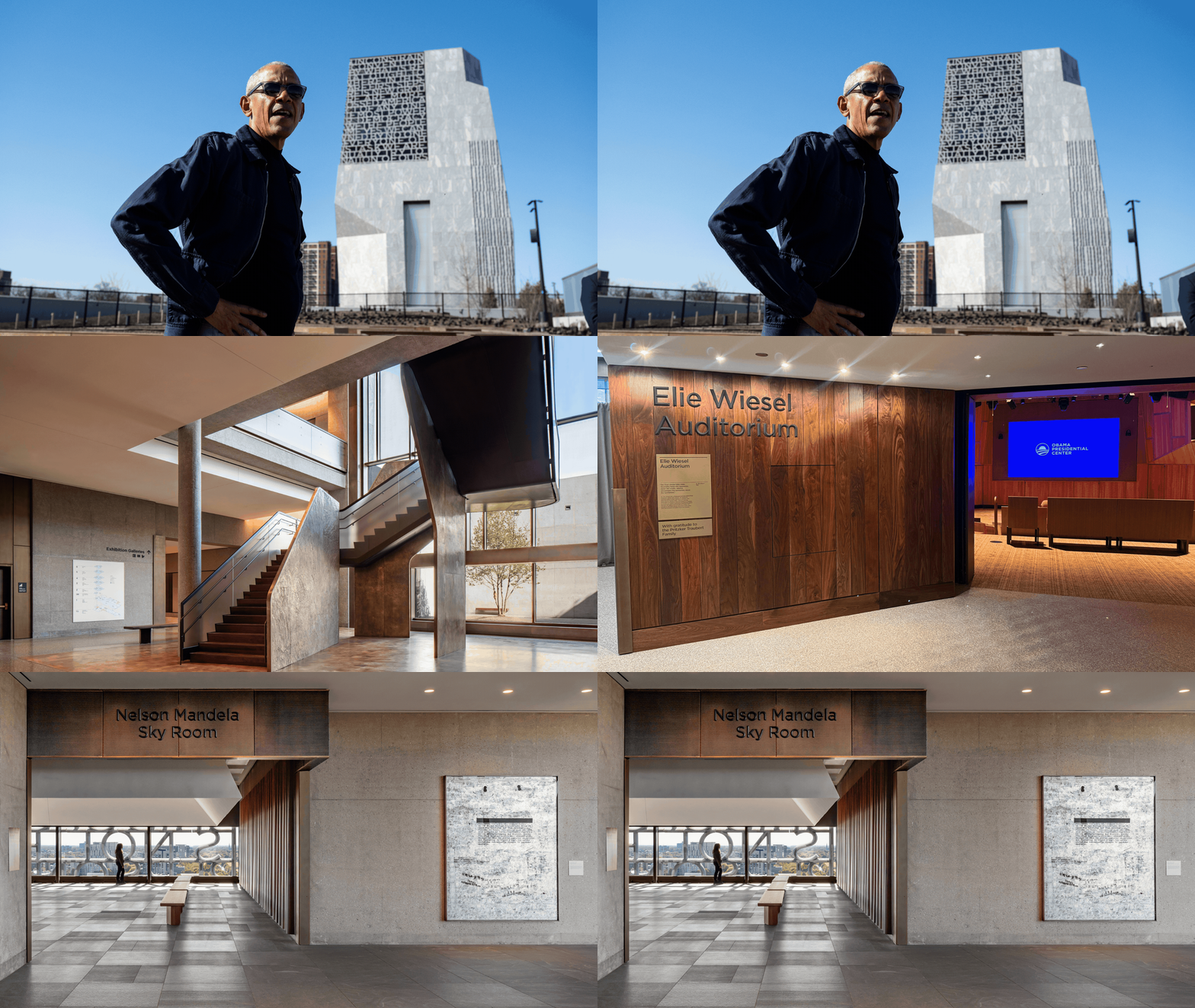
On June 19, the Obama Presidential Center will officially open, bringing years of planning, design, and collaboration to life. Located in Chicago’s historic Jackson Park, the 19.3-acre campus reimagines what a presidential center can be—not simply a place that preserves history, but one that encourages civic engagement, learning, and community connection.
The choice to open on Juneteenth, the federal holiday commemorating the end of slavery in the United States, underscores those themes. Throughout opening weekend, visitors will have opportunities to experience performances, art, storytelling, and community programming that reflect the Center’s commitment to public participation and dialogue.
Designed by Tod Williams Billie Tsien Architects in collaboration with landscape architects Michael Van Valkenburgh Associates, the campus brings together a museum, a branch of the Chicago Public Library, athletic and wellness facilities, community gathering spaces, gardens, and expansive public open space. Rather than centering solely on the legacy of a presidency, the Center invites visitors to engage with ideas about leadership, democracy, and the role individuals can play in shaping their communities and creating a better future.
For Via Collective, contributing to the Obama Presidential Center meant helping translate that vision into a cohesive and accessible wayfinding experience for everyone who enters the campus. As part of a multidisciplinary design team led by Manual, Via Collective established a strategic wayfinding foundation for the campus-wide signage and graphics program, developing key planning documents that defined the project’s approach to user experience, accessibility, inclusive design, and map design.
This work helped to create an intuitive framework for navigating the Center’s diverse spaces—from the museum and public amenities to the gardens, gathering areas, and surrounding landscape—ensuring that visitors of all backgrounds and abilities could explore, engage, and connect with the campus. We are proud to have contributed to a project whose commitment to inclusion, public participation, and civic engagement closely aligns with our own mission to create environments that welcome, inform, and inspire.
At the heart of the campus stands the landmark museum, home to exhibitions exploring the lives, leadership, and public service of President Barack Obama and First Lady Michelle Obama. Through personal artifacts, interactive experiences, and commissioned artworks, the exhibits encourage visitors to reflect on both history and their own capacity to create change. Across the campus, landscapes, gathering spaces, and cultural programming work together to create an environment designed for learning, reflection, and connection.
The commitment to Bring Change Home is also reflected in the addition of a Chicago Public Library branch and Home Court, the basketball and sports facility. Together, these additions underscore the Obamas’ commitment to maintaining a connection with the neighborhood where Barack and Michelle lived and worked throughout different stages of their lives.
Beyond its cultural significance, the Obama Presidential Center offers an example of how architecture, landscape, and storytelling can shape a meaningful visitor experience for decades to come. The campus has been designed not only as a destination, but as a place that encourages exploration, conversation, and engagement.
Presidential centers are often viewed as places of remembrance, but the Obama Presidential Center expands that definition. It represents a new stage in the evolution of presidential centers, redefining their role beyond the preservation of history. Rather than serving solely as archives and museums, presidential centers are increasingly becoming civic and cultural institutions that foster community engagement, education, and public participation. In doing so, they encourage visitors not only to reflect on the past but also to apply its lessons to the challenges and opportunities of the future.
Photo Credit: Obama Foundation (1, 2, 4) & Via Collective (3)