Workplaces are Changing; the Way We Design Them Should, Too
The modern workplace is less about ritual and routine, and more about how people move, meet, collaborate, and connect. Open offices, hot desking, shared amenities, digital room booking, and flexible collaboration spaces have changed what it means to come to work. A desk may not always be yours. A meeting room may be somewhere you’ve never been before. The team you work with may change from day to day.
As workplaces become more dynamic, the environments around us need to help people adapt. Wayfinding is a part of that equation.
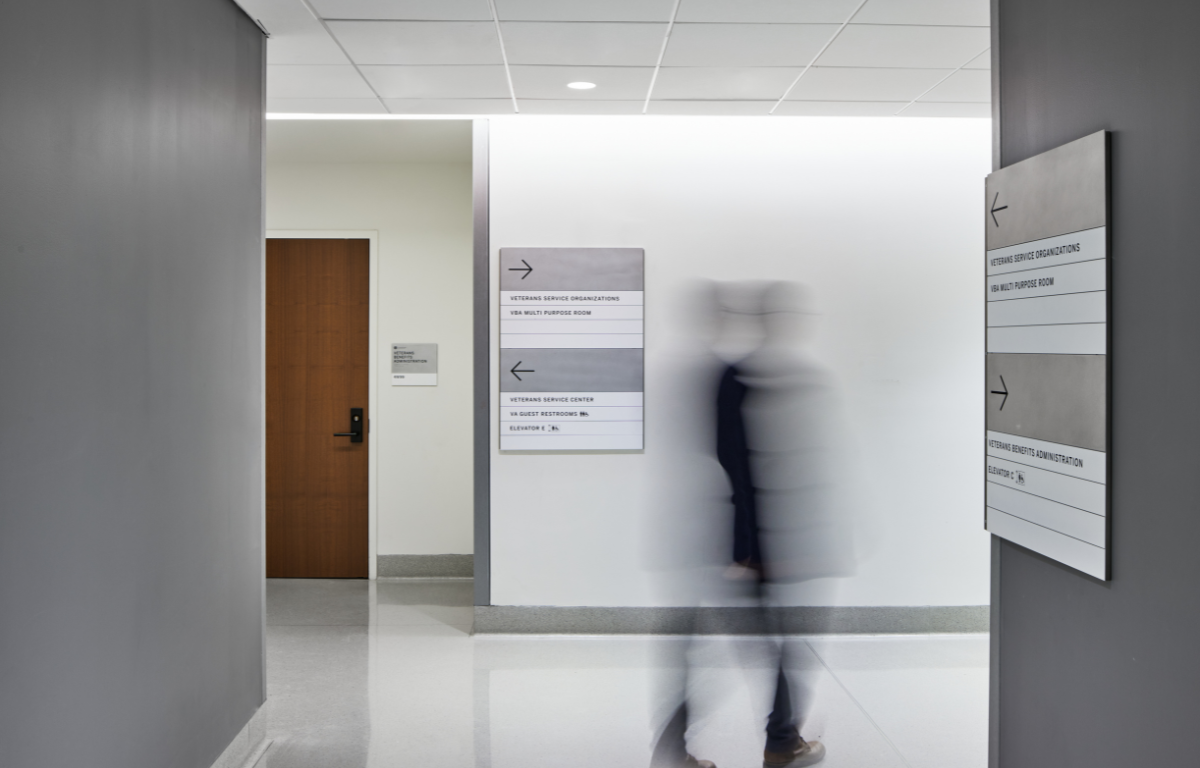
At its core, wayfinding is about advocating for the person moving through the space. That could be a new employee finding their way on their first day, a student looking for their classroom, a visitor arriving for a meeting, or a returning worker trying to reorient themselves after a workplace has been reconfigured.
Everyone arrives with a different level of familiarity, but everyone needs the environment to communicate clearly. Effective signage and environmental graphics can reduce the uncertainty of not knowing where to go, help people understand how a space is organized, and build a mental map of the workplace.
Designing for Change: Digital Tools and Adapting Environments
When dedicated offices become shared spaces where we work, the physical environment has to keep up the pace. A room might be reserved through an app, but how do you find it? A directory might tell you where a department is located, but how do you know which direction to take once you leave the elevator? A workplace may have been designed around one team structure, but what happens when that structure changes?
Change is inevitable, and good wayfinding anticipates it. Rather than simply documenting the space on opening day, a wayfinding system can create a framework that evolves with the organization. Digital tools and physical cues should work together. Flexible graphics and environmental storytelling can allow shared spaces to reflect the people and ideas occupying them today without making the entire system feel temporary tomorrow.
Finding Your Place: Districts and Environmental Graphics
In a flexible workplace, navigation isn’t simply getting from point A to point B. It’s about understanding where you are and what happens around you.
One way to build that understanding is through districting: creating distinct identities for different areas while maintaining a clear relationship between them. Color, typography, materials, graphics, signage, and architecture can all help establish those identities.
A focused work area may feel different from a collaboration space. A meeting room will have a different character from a phone room. A shared kitchen or lounge is more than a place to grab coffee—it can become a destination and a recognizable part of the workplace.
Even the spaces in between matter. Long hallways or expanses of wall space can become opportunities to communicate an organization’s culture, history, or ideas. The challenge is creating a common thread that connects these different experiences so the workplace still feels like one place.
When these elements work together, people begin to build an image of the workplace, a mental map that allows people to not just understand where they are, but how the different pieces of the environment relate to one another. That understanding can do something more than help people find a conference room. It can help people feel like they belong.
Advocating for the Visitor: Who Are We Designing For?
Workplace design is about the people who use the space. Architects and engineers think about how a building performs, operates, and connects. Wayfinding asks another question: What does the place feel like to someone who doesn’t know it yet?
Looking from that perspective reveals moments where uncertainty can get in the way:
- A decision point without a clear direction.
- A destination without an obvious or recognizable entrance.
- An open workspace without enough information to understand how it works.
- An employee who knows where they need to go but can’t figure out how to get there.
These moments may seem small, but they add friction to the experience of a workplace.
Good wayfinding doesn’t announce itself. It works in the background, giving people enough information to move forward with confidence. When people spend less time figuring out where they are and what they’re supposed to do, they have more capacity for the things that actually matter: the people they’re meeting, the work they’re doing, and the ideas they’re there to share.
At Via Collective, we see wayfinding as an opportunity to advocate for that experience. The best systems are intuitive enough to adapt, clear enough to build confidence, and connected enough to the organizational identity that navigating the workplace becomes part of understanding the place itself. A workplace shouldn’t just tell people where to go. It should help them understand where they are, and feel that they belong there.
As your workplace evolves, your wayfinding should, too. We can help you design dynamic, intuitive navigation solutions that make your employees and visitors feel like they belong. See our portfolio for examples of our workplace projects, or drop us a line at hello@viacollective.com to discuss how we can help your environment adapt.