At Via Collective, our practice is rooted in understanding how people navigate complex, ever-evolving environments. Last week, I had the opportunity to step back and look at the macro-level forces shaping those environments at the inaugural Design-Build Institute of America (DBIA) NYC Metro Region Conference.
Held at the iconic Museum of Jewish Heritage in New York, the two-day event centered on the theme of “Building What’s Next: Advancing Design-Build Across the New York Metro Region”. With a packed schedule of panels, keynotes, and breakout sessions, it was an invaluable opportunity to engage with industry leaders, design partners, and the very agencies we collaborate with, including the NYC Department of Design and Construction (DDC), the Metropolitan Transportation Authority (MTA), and the NYC Economic Development Corporation (EDC).
Here are my top takeaways from a dynamic few days of discussions on project delivery, infrastructure modernization, and cross-disciplinary collaboration:
Connecting Mega-Projects Through Shared Expertise
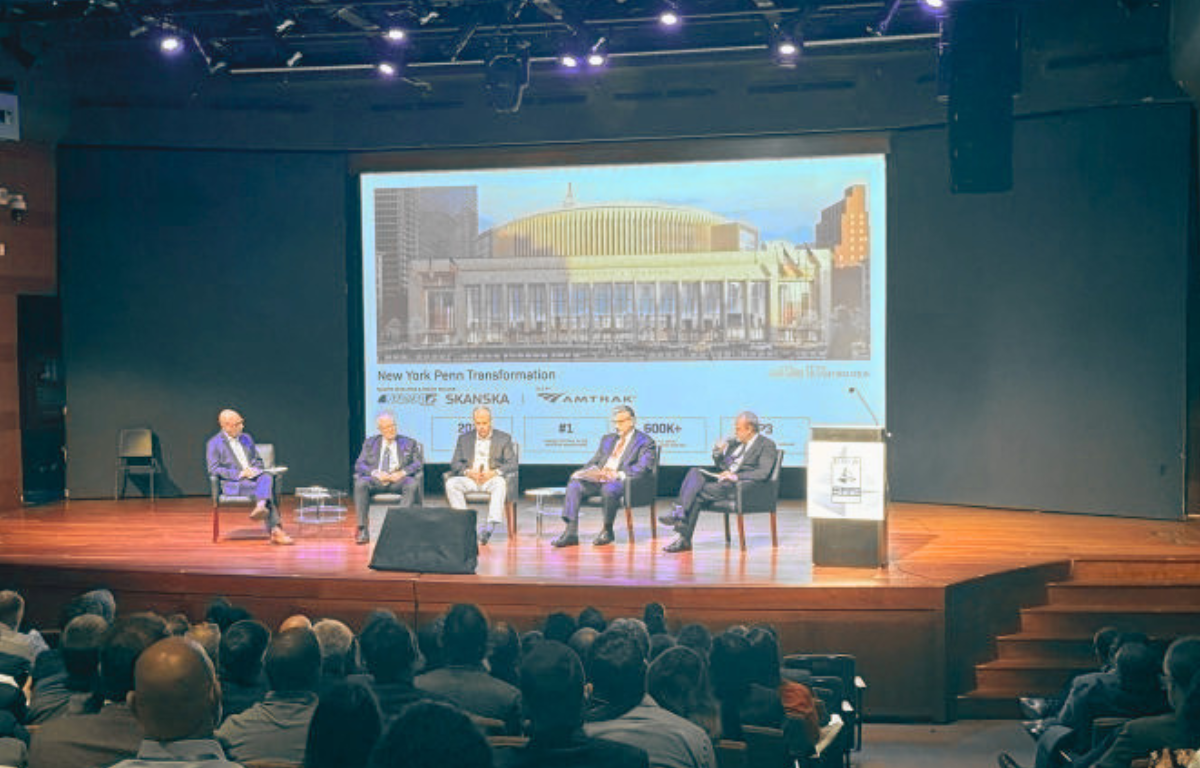
A dominant theme of the conference was the sheer scale and complexity of current regional transportation projects. Big conversations were held regarding major initiatives, notably the monumental Penn Station project. At Via Collective, we are incredibly proud to support this effort alongside our partners at AECOM, HDR, Halmar International, and Amtrak.
Hearing the broader industry context around such mega-projects reinforced the value of integrated delivery—an approach where design and construction teams collaborate under a single contract from day one. By working as a unified team from the start, we can maintain project momentum while minimizing disruptions for everyday travelers.
The MTA’s approach to modernizing New York’s rail network highlighted this perfectly. AECOM leaders Nelson Montecillo and Eran Bachar led an insightful session on MTA Design-Build initiatives, specifically discussing the LIRR Hall Interlocking Expansion Project and the NYCT Railcar Acceptance & Testing Facility. Joined by representatives from the MTA and MLJ Contracting, the panel illuminated how early planning helps teams overcome tight site constraints in active rail corridors, ensuring critical capacity improvements are delivered with the end user in mind.
Solving Complex Challenges with Alternative Technical Concepts
Design-build delivery is more than an efficient schedule; it is an avenue for design excellence and purposeful problem-solving. A standout discussion on this front was led by Gia Mainiero of Dattner Architects, on the panel titled “Alternative Technical Concepts—Roadways to Success in Innovative Solutions at New York’s JFK Airport”.
Alternative technical concepts allow contractors to propose thoughtful design modifications early in the process. This flexibility ensures the final environment provides clarity and access for the end user, rather than forcing teams to build exactly what was initially drawn regardless of new insights.
Joined by experts from Skanska, Parsons Corporation, and The Port Authority of New York & New Jersey, the session showcased how this collaborative framework empowers teams to propose breakthrough solutions that owners might not have initially considered. Via Collective’s work was on the screen and showcased how our wayfinding solutions contributed to the overall success of the project. Mainiero also contributed to a secondary panel, “From Principles to Practice: Cross-Disciplinary Perspectives for Design-Build Delivery,” highlighting the essential coordination between architects, engineers, and construction managers.
The Agency Perspective—Reflections and a Forward Look
Understanding owner priorities is critical to aligning our wayfinding strategies with broader project goals. One of the most anticipated sessions was “The Agency Perspective—Reflections and a Forward Look,” which provided a capstone to the conference.
This fireside chat brought together key decision-makers across the region:
- Paul Ochoa, Commissioner, NYC Department of Design and Construction
- Ruth Burney, Design-Build Program Manager, NYC Department of Environmental Protection
- Len Greco, Senior Vice President, NYC Economic Development Corporation
- Rachel Laiserin, Chief of Staff, Construction and Development, Metropolitan Transportation Authority
- Cheehan Leung, Director, Mayor’s Office of Capital Project Development
The panelists discussed evolving city priorities, lessons learned from their design-build journeys, and how collaborative delivery models are critical to advancing climate resilience and infrastructure reliability across the NYC Metro area. Additionally, a dedicated breakout session by Fernanda Freitas from Arup provided a detailed overview and progress update on the NYC DDC Alternative Delivery Program.
Keeping Communities at the Center
As a wayfinding studio, we are constantly advocating for the visitor and the everyday user. We were thrilled to see community engagement highlighted on the main stage. Melissa Johnson Associates presented an excellent session on “Public Outreach Possibilities and Pitfalls,” addressing the vital work of managing community relations and mitigating risks while the shovel is in the ground. Successful infrastructure is not just technically sound; it must be intuitively understood and embraced by the communities it serves.
Looking Ahead
The success of this inaugural conference is a testament to the dedication of its organizers, Craig Covil, and Co-Chairs Joanne Iddon (Arup) and Jayne Czik (Citnalta Construction Corp.).
As we look to the future pipeline of work across the New York Metro region, Via Collective is excited to continue partnering with design-builders, architects, and public agencies. By weaving strategic, inclusive wayfinding into the early stages of design-build procurement and execution, we can ensure that New York’s next generation of infrastructure is as navigable and welcoming as it is technically advanced.